

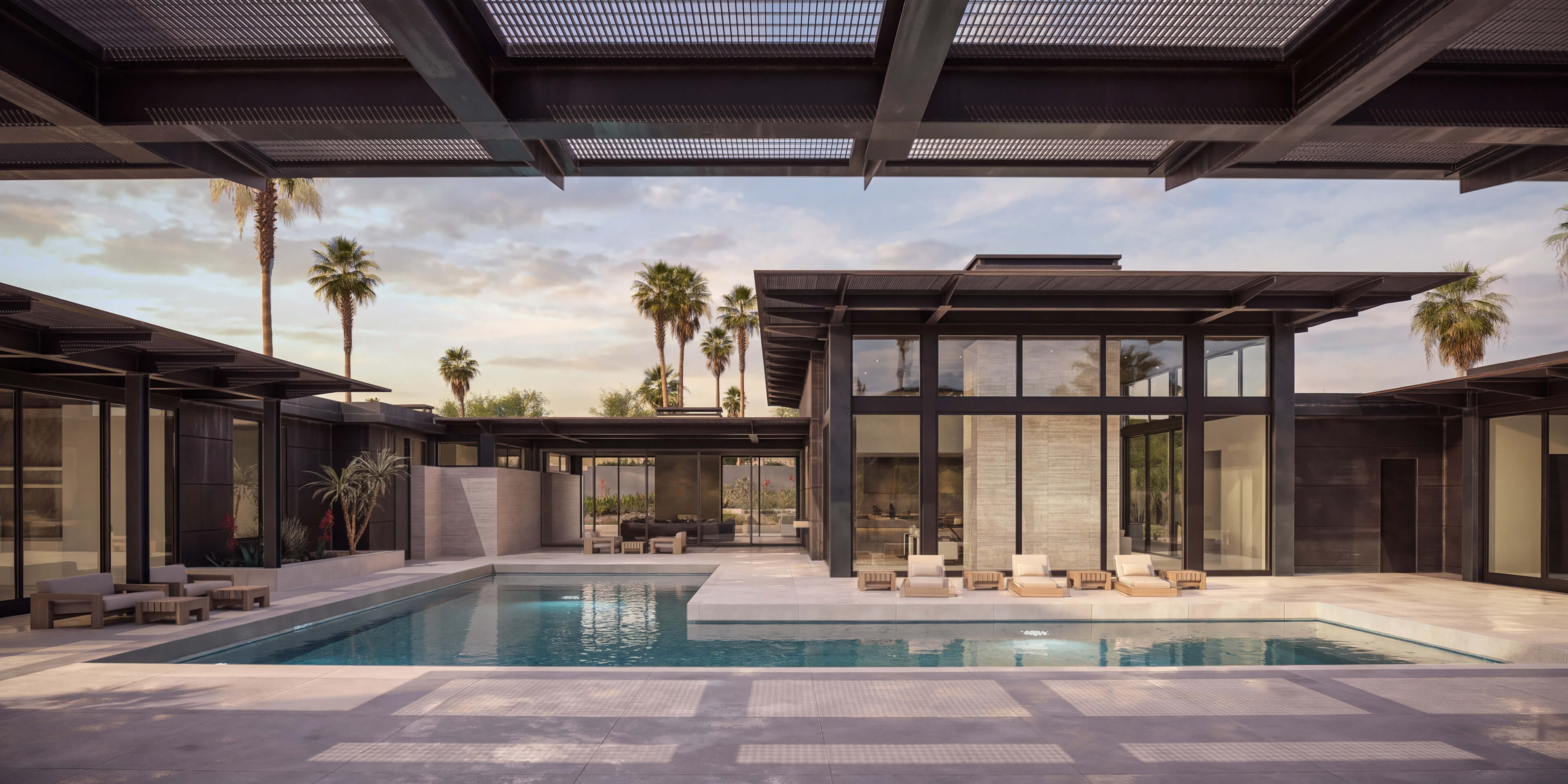
Scottsdale and Paradise Valley sit beside each other and behave nothing alike.
Scottsdale is broad and active, with year-round demand and a steady flow of buyers relocating from higher-cost states. It supports everything from Old Town walkability to the mountain-edge parcels in the north.
Paradise Valley is the opposite: small, incorporated, effectively built out, and protected by zoning that keeps lots large and density low. Land trades on relationships as often as on listings, and what does come available is usually acquired for the site rather than the structure standing on it.
Both benefit from the same advantages — Sky Harbor twenty-five minutes away, and an outdoor season that runs from October to May while much of the country is indoors.
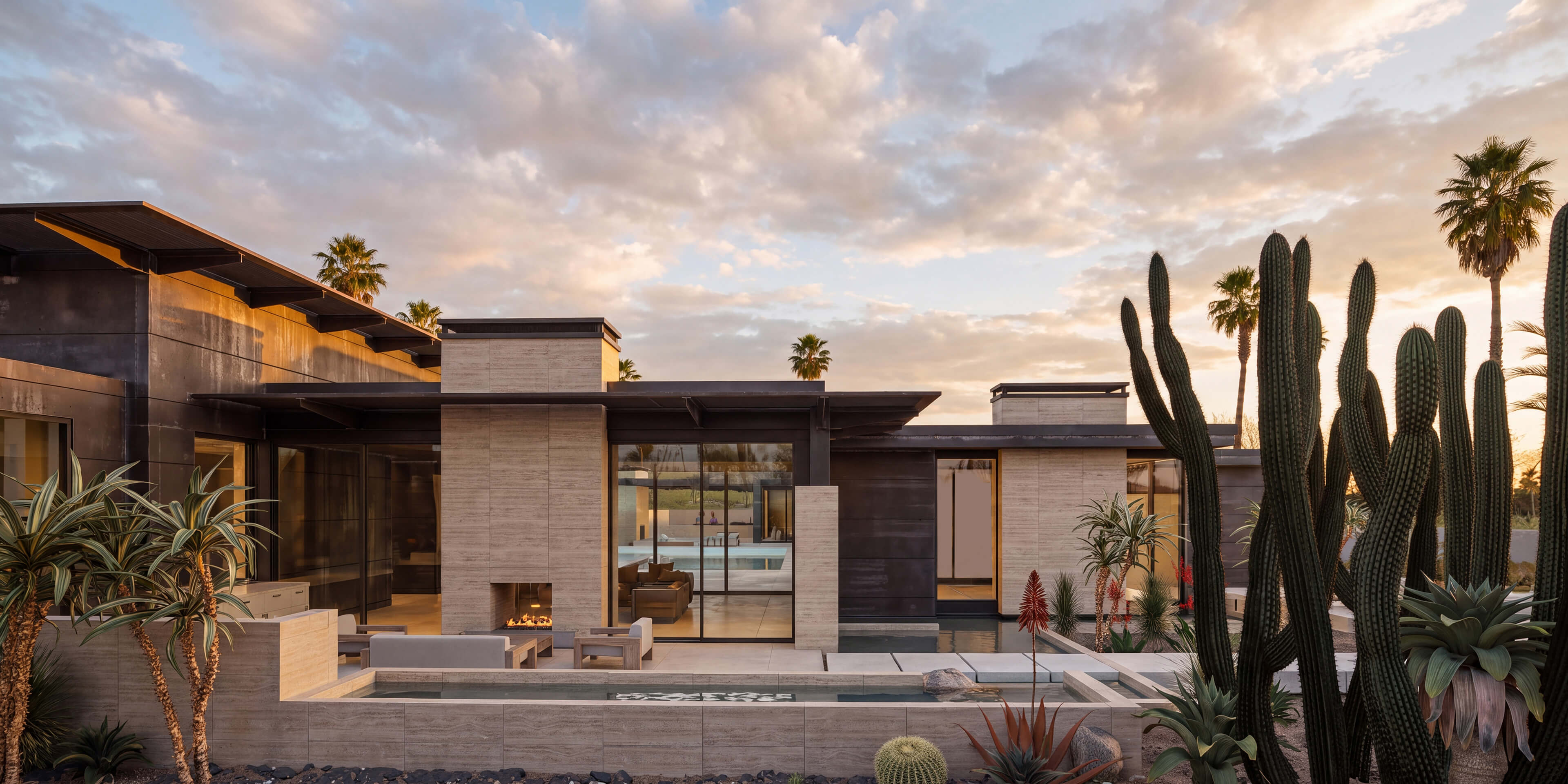
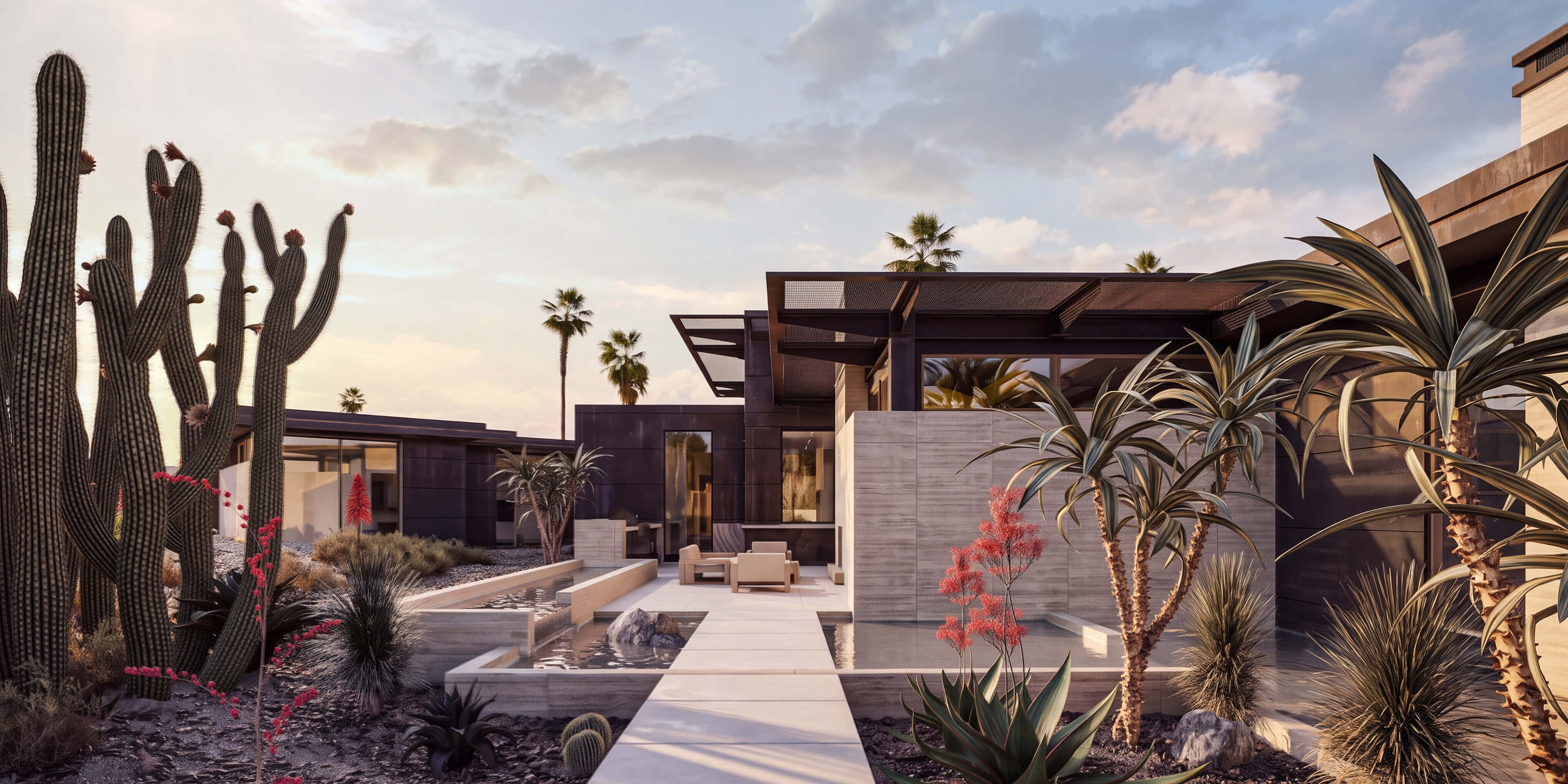
The Sonoran light is extraordinary and unforgiving in equal measure. Homes that fail here are the ones that treat the climate as something to be air-conditioned away.
We design the other direction. Deep overhangs and shaded outdoor rooms that make the shoulder seasons the best part of the year. Glazing oriented to mountain views and calibrated for solar gain rather than maximized indiscriminately. Courtyards and water used for cooling as well as effect. Circulation that lets a house open completely in March and close down efficiently in July.
The material palette comes from the setting — stone, steel, plaster, and wood that weathers into belonging rather than fighting the landscape for attention. Arizona has a serious architectural tradition, from Taliesin West forward, and the work here is meant to sit within it.
Our Scottsdale residences are organized around indoor-outdoor continuity: living space that extends onto covered terrace without a threshold, pools positioned as landscape rather than amenity, and glass that disappears when the weather is right.
In Paradise Valley, the work goes further. These are estate residences at the highest level of finish we produce, on properties where Camelback or Mummy Mountain defines the view and every sightline is composed around it. Lot sizes allow for privacy, separation, and a level of siting precision that is simply not available elsewhere in the valley.
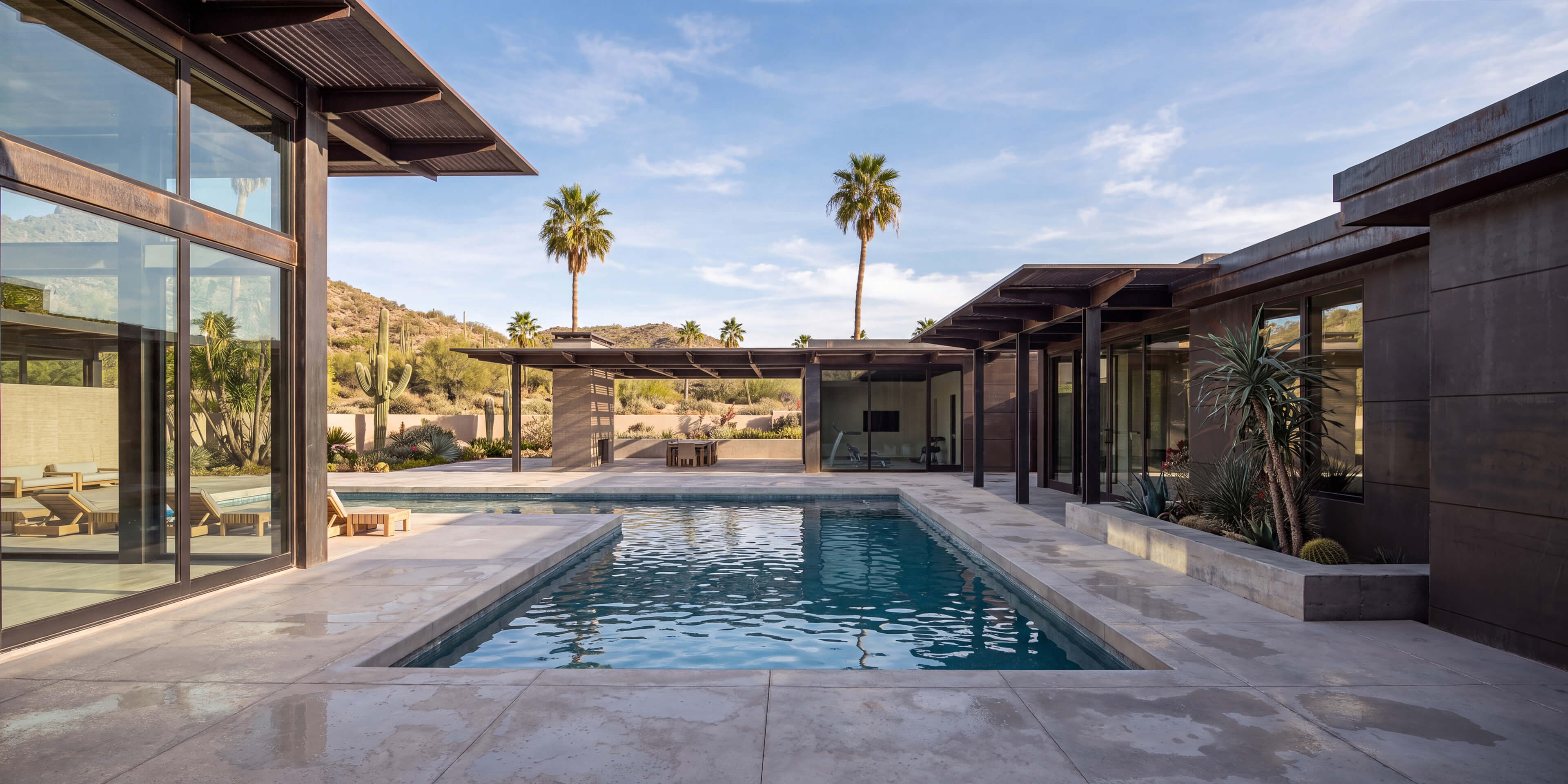
Paradise Valley is a separate incorporated town with large-lot zoning, almost no commercial development, and a fixed supply of estate properties. Scottsdale is considerably larger and more varied, with a broader range of neighborhoods, price points, and year-round activity.
Desert contemporary is an approach shaped by the Sonoran climate: deep overhangs and shaded outdoor rooms, glazing oriented for views and controlled for solar gain, and materials drawn from the surrounding landscape. It is designed around the desert rather than imposed upon it.
The town is built out and protected by zoning that maintains large minimum lot sizes and restricts commercial development. New supply is essentially confined to redevelopment of existing properties.
Roughly twenty-five minutes, with Scottsdale Airport serving private aviation directly.